
Stretching is one of the most overlooked aspects of fitness, yet it plays a crucial role in maintaining flexibility, improving mobility, and supporting muscle recovery. Whether you’re an athlete, fitness enthusiast, or someone who spends long hours sitting at a desk, incorporating stretching into your daily routine can help reduce muscle tension, improve posture, and enhance overall physical performance.
Regular stretching not only helps prevent injuries but also promotes better blood circulation and faster recovery after exercise. By dedicating just a few minutes each day to stretching, you can improve your flexibility, reduce stiffness, and feel more comfortable in your daily movements.
In this article, we’ll explore the best stretching exercises for flexibility and recovery, along with their benefits and proper techniques.
Why Stretching Is Important
Stretching helps keep muscles flexible, strong, and healthy.
Benefits of Stretching
✔ Improves flexibility
✔ Enhances range of motion
✔ Reduces muscle stiffness
✔ Supports recovery after exercise
✔ Improves posture
✔ Reduces injury risk
✔ Relieves stress and tension
✔ Improves blood circulation
Regular stretching can improve both physical performance and overall well-being.
Types of Stretching
1. Dynamic Stretching
Dynamic stretches involve controlled movements that prepare the body for physical activity.
Examples
- Arm circles
- Leg swings
- Walking lunges
Best Time
Before workouts
2. Static Stretching
Static stretches involve holding a position for a period of time.
Examples
- Hamstring stretch
- Quad stretch
- Shoulder stretch
Best Time
After workouts or during recovery sessions
Best Stretching Exercises for Flexibility and Recovery
1. Hamstring Stretch
The hamstrings are located at the back of the thighs and often become tight from prolonged sitting.
How to Perform
- Sit on the floor with one leg extended.
- Reach toward your toes.
- Keep your back straight.
- Hold for 20–30 seconds.
Benefits
✔ Improves flexibility
✔ Reduces lower back tension
✔ Supports better posture
2. Quadriceps Stretch
This stretch targets the front of the thighs.
How to Perform
- Stand upright.
- Hold one ankle behind you.
- Pull your heel toward your glutes.
- Hold for 20–30 seconds.
Benefits
✔ Improves thigh flexibility
✔ Reduces muscle tightness
✔ Supports knee health
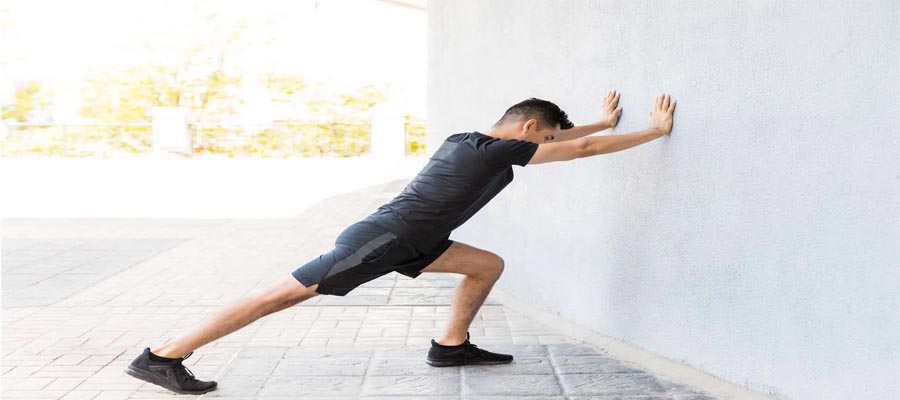
3. Calf Stretch
The calf muscles often become tight after walking, running, or standing for long periods.
How to Perform
- Place hands against a wall.
- Step one foot back.
- Keep the back heel on the ground.
- Lean forward gently.
Hold
20–30 seconds per side.
Benefits
✔ Improves ankle mobility
✔ Supports running performance
✔ Reduces muscle stiffness
4. Child’s Pose
A popular yoga stretch that relaxes the entire body.
How to Perform
- Kneel on the floor.
- Sit back on your heels.
- Extend your arms forward.
- Lower your chest toward the floor.
Hold
30–60 seconds.
Benefits
✔ Relaxes the back
✔ Reduces stress
✔ Improves flexibility
✔ Supports recovery
5. Cat-Cow Stretch
This dynamic movement improves spinal mobility.
How to Perform
- Start on hands and knees.
- Arch your back upward (Cat).
- Lower and lift your chest (Cow).
- Repeat slowly.
Repetitions
10–15 repetitions.
Benefits
✔ Improves spinal flexibility
✔ Reduces back stiffness
✔ Enhances mobility
6. Hip Flexor Stretch
Long periods of sitting can tighten the hip flexors.
How to Perform
- Step into a lunge position.
- Lower your back knee.
- Push hips forward gently.
- Hold the stretch.
Hold
20–30 seconds per side.
Benefits
✔ Improves hip mobility
✔ Reduces lower back discomfort
✔ Supports posture
7. Butterfly Stretch
This stretch targets the inner thighs and hips.
How to Perform
- Sit on the floor.
- Bring the soles of your feet together.
- Hold your feet.
- Gently press knees toward the floor.
Hold
20–30 seconds.
Benefits
✔ Improves hip flexibility
✔ Reduces groin tightness
✔ Enhances lower-body mobility
8. Shoulder Stretch
Great for reducing upper-body tension.
How to Perform
- Bring one arm across your chest.
- Use the opposite arm to hold it.
- Keep shoulders relaxed.
Hold
20–30 seconds per side.
Benefits
✔ Relieves shoulder tension
✔ Improves upper-body flexibility
✔ Supports posture
9. Triceps Stretch
This stretch targets the back of the upper arm.
How to Perform
- Raise one arm overhead.
- Bend the elbow.
- Use the opposite hand to gently assist.
Hold
20–30 seconds.
Benefits
✔ Improves arm flexibility
✔ Reduces upper-body tightness
10. Cobra Stretch
An excellent stretch for the abdominal muscles and lower back.
How to Perform
- Lie face down.
- Place hands under shoulders.
- Press your chest upward.
- Keep hips on the floor.
Hold
15–30 seconds.
Benefits
✔ Stretches abdominal muscles
✔ Improves spinal mobility
✔ Reduces back stiffness
Sample 10-Minute Stretching Routine
Warm-Up (1 Minute)
- March in place
- Arm circles
Stretching Session
Hamstring Stretch
30 Seconds Each Side
Quadriceps Stretch
30 Seconds Each Side
Calf Stretch
30 Seconds Each Side
Hip Flexor Stretch
30 Seconds Each Side
Butterfly Stretch
30 Seconds
Shoulder Stretch
30 Seconds Each Side
Child’s Pose
1 Minute
Cobra Stretch
30 Seconds
Cool Down
Deep breathing for 1 minute.
When Should You Stretch?
Before Exercise
Use dynamic stretches to prepare muscles and joints.
Examples
- Leg swings
- Arm circles
- Walking lunges
After Exercise
Use static stretches to improve flexibility and aid recovery.
Benefits
✔ Reduced muscle tension
✔ Improved flexibility
✔ Faster recovery
During the Day
Stretching can help counteract the effects of prolonged sitting.
Recommended For
- Office workers
- Students
- Remote workers
Common Stretching Mistakes to Avoid
Bouncing During Stretches
Can increase injury risk.
Better Approach
Use slow and controlled movements.
Holding Your Breath
Continue breathing normally during stretches.
Benefits
✔ Better relaxation
✔ Improved stretch effectiveness
Stretching Too Aggressively
Stretching should never be painful.
Rule
Feel tension, not pain.
Skipping Stretching Altogether
Regular stretching supports long-term flexibility and mobility.
Benefits of Regular Stretching
✔ Improved flexibility
✔ Better posture
✔ Reduced muscle soreness
✔ Increased range of motion
✔ Enhanced athletic performance
✔ Better circulation
✔ Reduced injury risk
✔ Improved recovery
✔ Less stress and tension
Stretching Checklist
✓ Stretch major muscle groups
✓ Hold each stretch 20–30 seconds
✓ Breathe normally
✓ Stretch consistently
✓ Avoid bouncing
✓ Stay hydrated
✓ Stretch after workouts
✓ Listen to your body
Stretching is a simple yet powerful habit that can significantly improve flexibility, mobility, and recovery. Whether you’re recovering from a workout, reducing muscle stiffness, or improving overall movement, regular stretching offers numerous physical and mental benefits.
By incorporating these stretching exercises into your daily routine, you can enhance your flexibility, reduce injury risk, improve posture, and support long-term health and fitness. Just a few minutes each day can make a noticeable difference in how your body feels and performs.